Why I joined Mercor – Ayushi Sinha
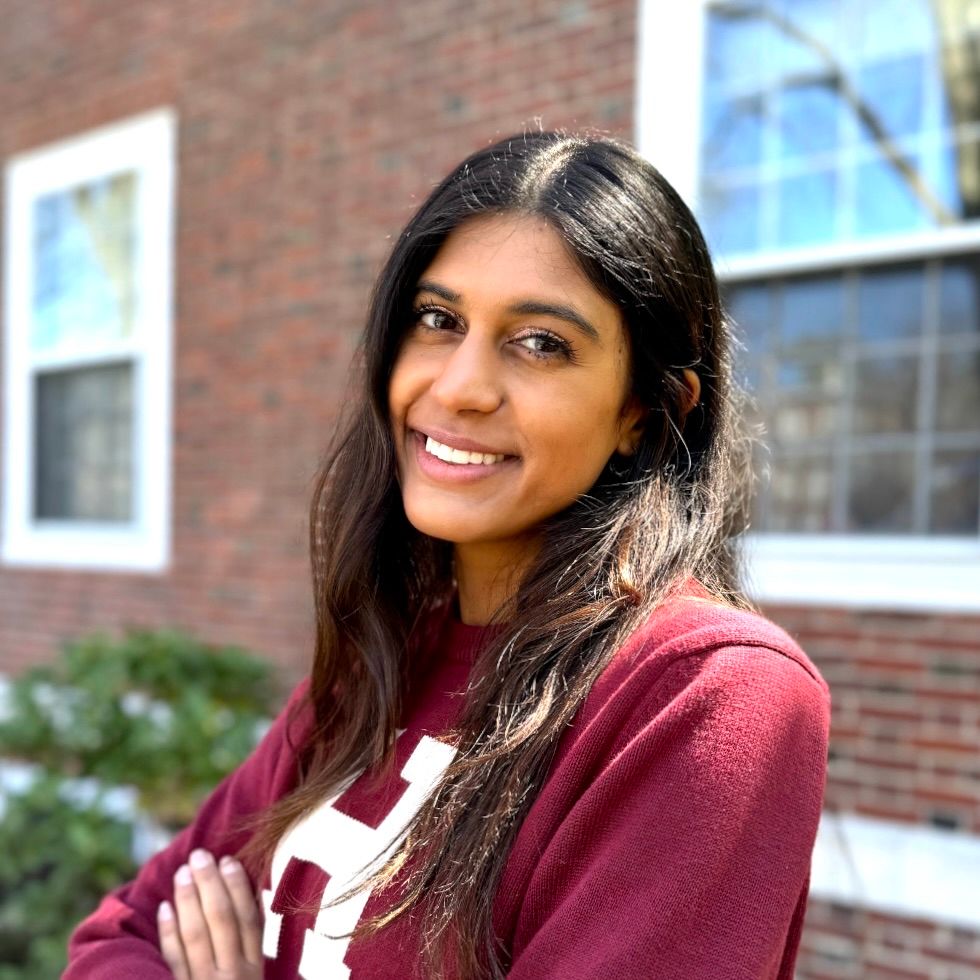
Ayushi founded a healthcare AI startup before joining Mercor as a Product Manager. She came looking for a team that understood founder life and problems worth solving at scale.
Tax season is coming up, and my accountant just reminded me that the last time I had a paycheck was 2022.
Most recently, I was a solo founder building Turmerik, a healthcare AI company. I lived out of a suitcase. I grew a massive LinkedIn presence to have the credibility to cold-DM biotech founders and pray they'd reply. My Notes app became a graveyard of pitch variations, pricing models, and 2 a.m. pep talks I wrote to myself. If you've ever been a solo founder, you know the specific loneliness of celebrating a small win and having nobody in the room to high-five.
I ultimately sunset Turmerik. In a lot of ways, it felt like failure. The kind you can rationalize on a LinkedIn post but still cry about at 11 p.m. on a Tuesday.
So when I started thinking about what came next, I was incredibly deliberate. While my friends in NYC were making spreadsheets to rank their Raya dates, I was making spreadsheets to rank companies. I tracked every conversation, every vibe check, every red flag. Same energy, but arguably even higher stakes. You spend more waking hours with your coworkers than your romantic partner. You've really got to know what you want.
The problem was, I didn't, or at least not yet. So I went gorilla trekking in Uganda with my friend Sahir. After three days of staring down silverbacks and thinking about my life in the middle of the jungle, I came back to the States with my list of criteria.
Here's what I knew I wanted.
- I wanted to work with people who got it. Founder life is hard to explain to someone who hasn't done it. The sleepless nights, the identity crisis when your company is you and then it isn't anymore. I needed colleagues who understood that language. My manager at Mercor went through YC and ~30% of my colleagues are former founders. They get it.
- I wanted to be somewhere that had already found product-market fit. After years of searching for PMF myself, I wanted to experience what it feels like when the thing is actually working. At Mercor, we pay out $2M a day to experts around the world and work with today’s most important frontier AI companies. There are problems you only get to solve at that kind of scale, and I wanted to be in the room for them.
- I wanted to be AI-native. This was the hardest trade-off, because healthcare isn't just something I worked in, but it's something I grew up talking about at the family dinner table, since my parents are doctors. I loved healthcare and was genuinely inspired by the mission, the complexity, and the patients whose lives you might actually improve. But I realized that in 2026, I'd have to choose: work at the frontier on technically interesting problems with massive impact at scale, or massive impact on individual lives. I had to be honest with myself. The technical problems I was spending most of my time on in healthcare weren't frontier AI. They were data pipeline plumbing. I wanted to work at the edge of what's possible, not massage CSVs into submission.
- When I looked at my resume, I noticed a pattern: I boomerang between prestige-maxxing and leaps of faith. Microsoft and Princeton, then Nines (unproven but an incredible learning experience). Bain Capital and Harvard Business School, then Turmerik (a crash course in building AI for biotech and pharma, where 'move fast and break things' is literally against FDA regulations). The safe move would have been to boomerang back to a big name, collect the logo, and let the brand do the talking. But I'm at the stage of my career where you either get escape velocity toward the exec track or you don't. And getting there means becoming a real expert in something, or being able to say you drove $XX M in revenue, or that you built the core tech that changed the trajectory of a company. You can't say any of that if you're coasting at a place where the biggest risk is choosing the wrong OKR. I wanted to go somewhere where I could say I helped create a step-function change.
So I joined Mercor. And now my life looks extremely different.
I have a desk with a curved monitor. I make small talk in the kitchen, which is a skill I am actively re-learning after years of talking mostly to myself and my laptop. I get to dress up for the office, which turns out to be an underrated perk when your previous work uniform was "whatever was clean in the suitcase." I have my first 401k and I still need to figure out where to invest it, so if you have suggestions, I'm all ears.
But beneath the jokes, the real thing is this: I'm not lonely anymore. I work with people who are sharp, creative, and moving fast on problems that matter. Mercor is building the infrastructure for how the world will work in the age of AI, and I get to work with a killer team to help shape that. After years of trying to build something from nothing, there is a specific energy in joining a team that's already sprinting and finding out you can keep pace.
If you're a former founder wondering whether you can thrive outside of founder mode, I’m here to reassure you that yes, you can survive as a W2 employee. And if you're thinking about Mercor specifically, come find out what it feels like when the rocket is already off the launchpad and someone hands you the controls.