Why I joined Mercor – Derek Shimozawa
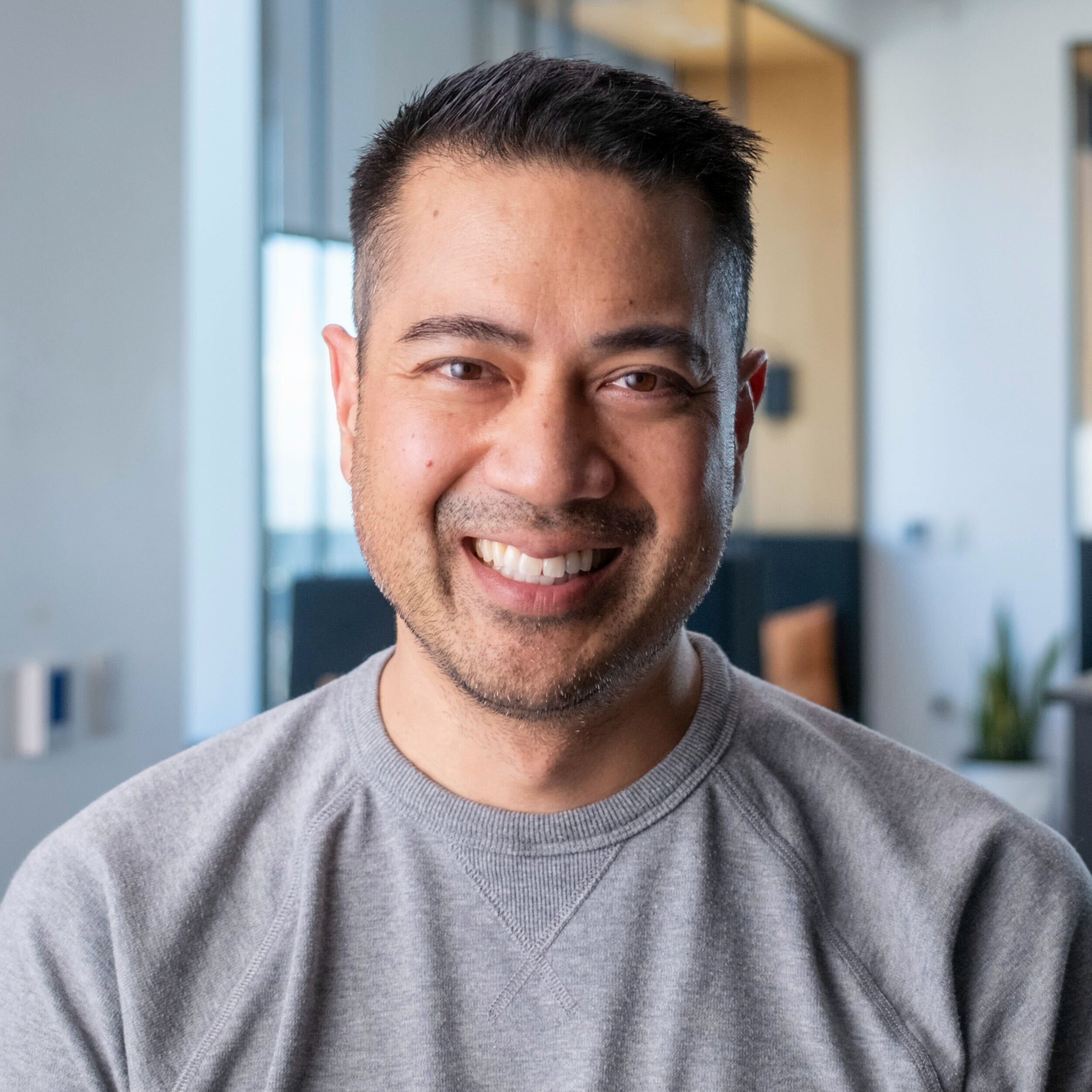
By Derek Shimozawa, Payments Platform Engineering
“There’s someone you should meet.”
It was June 2025, and that was my recruiter’s entire message. The person she wanted me to meet was Adarsh, Mercor’s cofounder and co-CEO. I had spent the last four years leading Airbnb’s payments product organization and knew almost nothing about Mercor. After that first call with Adarsh, I went to the office to meet Sundeep, Mercor’s President and former CPO at Uber.
What struck me first was the extraordinary concentration of talent and the speed of execution. The office was buzzing: everyone was aligned on the problem, the vision, and the fastest path to decision. Mercor was building the core data infrastructure for frontier AI and reinventing how experts work worldwide. Its ambition was enormous, and the team was uniquely equipped to deliver on it.
By the time I left the office, I knew I had found what I was looking for. To explain why, I first need to explain where I had been.
The role I was leaving
At Airbnb, I had the kind of role that looks hard to leave. Under co-founder Nate Blecharczyk, I led the product organization behind every dollar that moved through Airbnb, more than $100 billion a year. Over four years, my scope grew from leading a small team of PMs to multiple groups across five time zones. Together, we built the systems that moved money globally, from payouts and local payment methods to affordability, credit products, billing, ledgering, gift cards, and cross-border settlement.
Before Airbnb’s IPO, my team established new entities in the UK, India, Luxembourg, and Brazil and shifted critical payments volume to new processors, bringing host payout reliability to near-perfect levels. We built the controls and cross-platform ledger that enabled money to move securely at a massive scale. After the IPO, payments became a strategic growth lever for the company: new local payment methods, lower processing costs, and embedded finance solutions improved guest conversion and affordability. My teams worked on problems that touched millions of guests and hosts and hundreds of billions of dollars.
As my portfolio grew, however, I moved further from the hands-on work that had drawn me to product management. My days increasingly centered on reviewing others’ roadmaps and designs, while even strong ideas could take quarters to reach customers. I remained accountable for the overall direction, but I missed immersing myself in a difficult problem, designing the solution, and shipping the fix.
AI made that distance from hands-on work hard to ignore. These tools are rapidly expanding what a focused builder can accomplish and raising the standard for leadership. Earlier in my career, while working in ordering and payments for Amazon’s Retail/Core Shopping organization, I learned what that bar demands. One of Amazon’s core leadership principles says leaders “Are Right, A Lot.” To me, that doesn’t mean having ready-made answers. It means staying close enough to complex problems to ask the right questions, uncover hidden constraints, earn genuine technical credibility with your teams, and persist through delivery. In a field moving as quickly as AI, product intuition fades fast. I wanted to work somewhere mine would be continually tested and sharpened, not merely applied.
I’m in
On our first conversation, Adarsh got straight to the challenge: Mercor was scaling quickly, its financial and payments backbone needed to keep pace, and the team needed leaders who had built through this kind of massive growth before. I knew that kind of problem well. What pulled me in was the chance to solve it at the frontier of an entirely new category of work.
At the time, I had offers to lead larger, more established organizations in SVP and VP roles - the conventional next career step, at least on paper. But as I weighed them against Mercor, I realized I wasn’t seeking a bigger title. I wanted to be closer to the work again: tackling hard problems, navigating ambiguity, and measuring my impact by what I shipped rather than the size of the organization around me.
Sundeep and I spoke candidly about Mercor’s ambition, and the sheer speed and momentum required to achieve it. Transitioning away from a mature organization was a major shift; he encouraged me to step back, reflect on the decision, and follow up. But my mind was made up before I walked out the door: I had to join this rocket ship. That night, I replied, “I’m in.”
Why the opportunity is so large
AI advances along three axes: compute, algorithmic innovation, and data. Compute and models dominate the conversation, but data is not merely a supporting input. It determines what a model can learn and how it behaves. For frontier labs and enterprises alike, that makes data a strategic differentiator. The most valuable data is not neatly stored in a database or captured in a training manual. It lives in expert knowledge, complex workflows, bespoke applications, edge cases, and the decisions people make when there isn’t an obvious answer.
This is the opportunity Mercor is built to pursue. We partner with leading AI labs to develop the data and environments their models need, bringing together highly specialized experts, synthetic data, quality control, and rigorous evaluations in a continuous improvement cycle. We bring the same flywheel beyond the frontier, helping enterprises incorporate proprietary workflows, policies, and edge cases into AI systems that improve over time.
Making all of that real requires financial, payments, and contractual systems: paying companies for the data we use, compensating experts, putting the right agreements in place, and invoicing customers. That is where my team sits. It is the operating foundation that converts Mercor’s work across data acquisition, enterprise programs, evaluations, synthetic data, and physical world robotics into a scalable business.
A smaller team, greater leverage
At Mercor, I chose to become an individual contributor again. My engineering team is a fraction of the organization I had at Airbnb, but I have more direct ownership of the outcome. A lean team can quickly take a problem from first principles to production without layers of handoffs or approvals. I help shape the global expert experience, the financial infrastructure that supports it, and the product decisions connecting the two.
Since joining, I’ve helped rebuild Mercor’s core transactional and financial architecture. Weekly disbursements that once took more than ten hours at modest volume now run in minutes at 30 times the scale. New earnings interfaces give experts full visibility into upcoming disbursements, sharply reducing support inquiries. We automated client invoicing and moved most revenue reconciliation to auditable, real-time streams. These improvements bring immediate value to our community and customers, creating the scalable operational foundation needed for growth.
Decisions that might take weeks in a larger organization turn into action almost instantly here. At Airbnb and Amazon, I learned to lead large organizations and operate at global scale. At Mercor, I apply that experience hands-on at the very frontier of AI.
Come build with us
We are hiring people who want to work close to difficult problems: payments infrastructure, contracting systems, data systems, product, operations, evaluations, and expert tooling. You will have real responsibility, direct feedback, and the chance to build before the playbook exists. If that sounds like you, I would love to talk. Learn more at mercor.com/careers.