Why I joined Mercor – Kevin Shiau
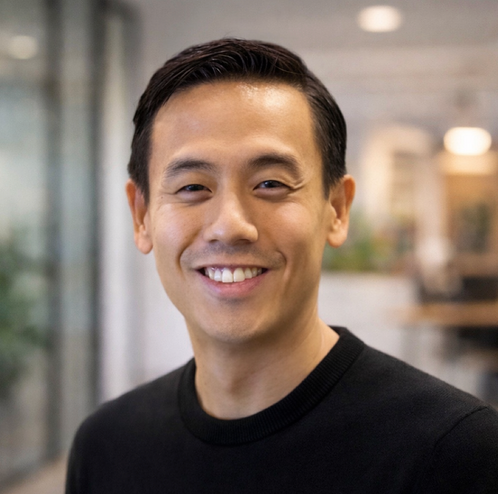
Electric. That was the feeling I had when I walked into the Mercor office. The vibrant energy was reminiscent of my first day at Tesla, where I spent the majority of my career. The office was buzzing: a group huddled on the couches by the elevator executing their near-term roadmap, a team whiteboarding product features behind the glass panes of the conference room, people moving with urgency between rooms for the next customer call. Mercor possesses the same early-day Tesla energy, and I knew immediately this place was special. I’ve spent my career chasing that feeling: the pull to help build a generational company just as it defines a new industry.
I entered the workforce during the Great Recession: interning at Merrill Lynch on Wall Street the summer before it was fire-sold to Bank of America, and joining Citigroup in investment banking full-time after graduation. The job market was grim, so I felt fortunate to land a job in 2009 — especially in finance. The Great Recession shaped my worldview and defined my career trajectory.
During the recession, the Obama administration passed the American Recovery and Reinvestment Act: a stimulus package that poured investment into the emerging cleantech industry. On the energy team at Citi, I advised dozens of fast-growing companies in the space. Wanting to be closer to the technology, I took my first operating role at First Solar, which is today the largest American solar module manufacturer. It was my first taste of the exhilaration of being hands-on in the wild-west days of a new industry.
A couple of years later, I left for an MBA at Wharton. A new era had emerged: smartphones became dominant, social media was omnipresent, and cloud computing transformed enterprises. The Big Tech companies of today were still relatively young and rapidly evolving. I interned at Amazon during my MBA, but the company was already established, and the energy, pace, and ambition felt off.
I entered the second year with my eyes set on Tesla. Elon had radical ambition, and I was an early believer that Tesla would be a transformative, generational company. I spent an entire year hustling to be hired, and finally received an offer months after graduation to join as the first finance hire to support a new idea — a bet that would become Tesla Energy.
Although a public company at the time, Tesla was hardly mature — and Elon’s unconventional leadership style greatly influenced me. I worked in sales to assist in deliveries, and on the manufacturing floor to facilitate material handling. We were encouraged to be hands-on — and that firsthand knowledge enabled fast strategic execution to scale the business while defining an industry. We built Tesla Energy — and the commercial battery storage industry — from scratch; today it’s a $13B revenue business. With the itch to build again, I joined an early stage AI robotics company, and helped close their Series C and land a strategic partnership with FedEx.
The throughline in my career has been a desire to partner with generational founders who have the ambition to build transformative companies that define new industries. I felt the spark of inspiration immediately upon meeting Brendan and Adarsh.
A few things made Mercor an obvious choice for me. The first is the two of them. I’m inspired by founders seeking to achieve the impossible. I love the challenge of identifying and executing the path from where we are today to where we aspire to be. Brendan and Adarsh see the future clearly the way Elon does, and they propel Mercor forward to shape the world they see. Their conviction and optimism — and how Mercor will drive extraordinary change in society — is infectious: it sparks ambition in everyone around them. I’ll always remember the glee Brendan showed when he showed me Mercor’s product for the first time — proud of what the company had built, grateful for the talent it had drawn, and electric about what lies ahead.
The second is the people. Mercor reminds me of Tesla: a collective culture — each individual operates with exceptional autonomy, yet shares a deep sense of humility and interdependence in pursuit of a common goal. I’m continuously inspired by my colleagues, each driven by insatiable curiosity, optimism for what we can achieve, and agency to effect change. We’ve hired extraordinary people.
The third is the mission. Mercor operates at the unique intersection of humans and AI, and has built the human intelligence infrastructure that powers the most transformative technology in our lifetime — and, I believe, for the better. I’ve spent an inordinate amount of time in my nearly two-decade-long career on manual, tedious, and repetitive work. We are creating the largest new job category, and advancing the frontier to unburden each profession of repetitive tasks and free people to do work that matters.
Mercor is creating a new industry that will reshape the economy, and is growing faster than any company in history. Finance is at the center of building the foundation for scale: data infrastructure, systems implementation, operational and financial visibility — and we are tasked to lay that groundwork on a compressed timeline. What excites me most is that what we’re building will change finance itself — a function that has historically been intensely manual. Legacy companies run armies of people managing general-ledger entries, expense approvals, financial analysis, and business-intelligence dashboards. At Mercor, we are designing the future of finance: a finance function built in an agentic world. Finance here will build the evaluations and train the agents that do that work, freeing us to spend our time drawing business insights and driving execution.
We will be defining what finance will be. That’s the work, and it’s why I’m hiring. If that’s the thing you want to be doing, come build it with us: www.mercor.com/careers.